
Five Alcohol Safety Tips

September 2, 2022
Paint Texture Border

For many college students heading back to school means new roommates, classes, fall sports, all-nighters, hanging out with friends, and parties. While most of these activities might seem harmless, fun, and even expected of a college student, excessive alcohol use can pose many safety risks, especially for women.


We know you're excited to see your friends, blow off some steam and have a good time. But we also know that going out without a plan can turn what was meant to be a fun evening into a nightmare. 


Did you know that…

  • At least 50% of student sexual assaults involve alcohol.
  • Approximately 90% of rapes perpetrated by an acquaintance involve alcohol.
  • About 43% of sexual assault events involve alcohol use by the victim; 69% involve alcohol use by the perpetrator. 1


At Collage, we care about you and want to provide you with helpful information about alcohol consumption and its risks to your sexual and emotional health. So, here are five safety tips that can help keep you and your friends out of risky situations that involve alcohol and sex.


1. Avoid Excessive Alcohol.

Low-risk drinking is thinking about your limit before getting to the party. Limiting alcoholic beverages to one drink per hour is recommended, a maximum of three for gals and four for guys for the entire evening. Alternating drinking with food and water is also a good option. 


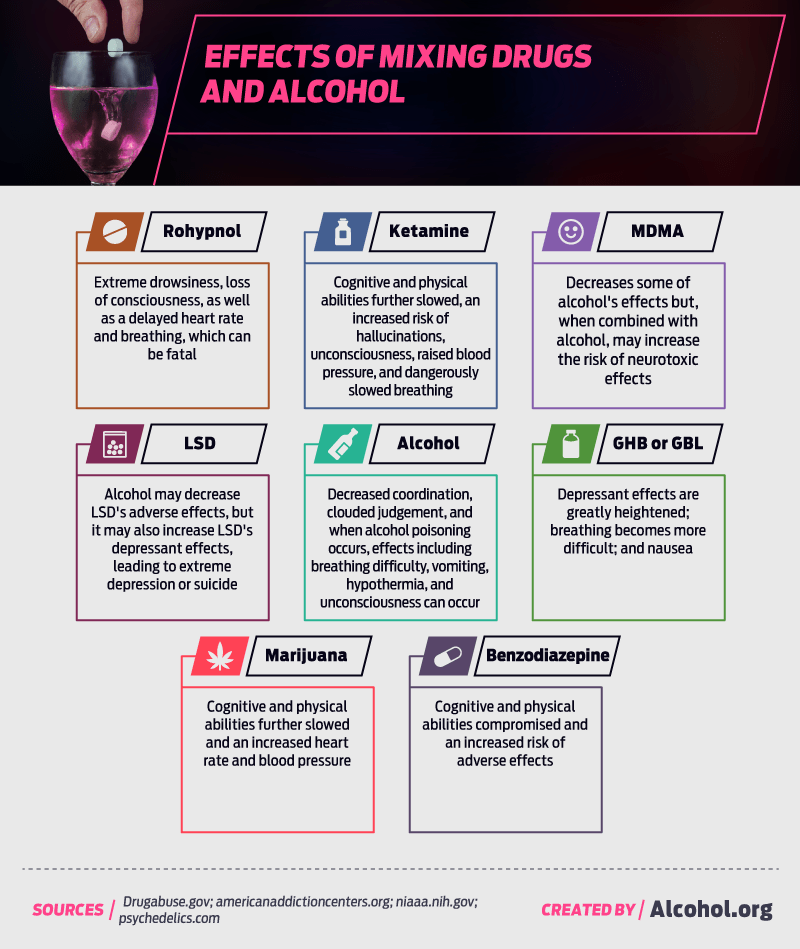
High-risk drinking can lead to excessive alcohol consumption. Common high-risk drinking activities are drinking games, chugging, doing shots, and mixing drinks with drugs or energy drinks. 2


2. Have a Group.

Ever heard of the old saying, 'there's safety in numbers?' Going to a party with a group of friends to act as lookouts for each other is a great idea! A way to keep safe within your group is to have a code word that will help tip off your friends if you feel like you are in an unsafe situation. Then, if anyone says or texts the code word, try to help get that friend out of the problem.


3. Choose Safe Areas.

The safest option at a party is to stay with your group at all times. Avoid isolation or putting yourself in situations where you can't be heard or seen. If you do need to leave your group, take a friend with you and make sure that you communicate with your group about where you're going and when you think you'll be back.


4. Be Protective of your Drink.

If you choose to drink at a party, keep it with you at all times. Never allow someone to refill your glass or get you a new drink. It's too easy to have something slipped into your drink when you're not looking. 56% of women and 44% of men said they've unknowingly had their drinks spiked. Out of this surveyed group, 52% said they had their first drink spiked during college. 3


If you did leave your drink unattended or accepted a drink from somebody else, pay attention to your body for the effects of a possible spike. Some signs of having your drink mixed with a drug can include extreme drowsiness, compromised cognitive/physical abilities, nausea, difficulty concentrating, and blurred vision.


5. Trust Your Instincts.

If you feel unsafe, uncomfortable, or worried for any reason while on a date or at a party, don't ignore those feelings. Get somewhere safe and find someone you trust. Sometimes acting on intuition can feel awkward, embarrassing, and even stupid. Never let those feelings stop you from seeking safety. You and your safety are more important than anyone's embarrassment or inconvenience. 

If you need help…

If you find yourself in a situation where you’ve been sexually assaulted, contact Campus Police or the Local Police immediately. 


If you or someone you know has been a victim of sexual assault, Family Advocacy Network is a great resource in Kearney as is Willow Rising in Grand Island. If you think you may be pregnant and you want someone to talk to, please contact us. We want to be there for you.

Young woman thoughtfully learning about the abortion pill before making a pregnancy decision.
July 21, 2026
Learn how the abortion pill works and what to expect. Colllage center offers free pregnancy testing, ultrasounds, and more. Contact us.
June 28, 2026
If you're considering abortion, there's one medical step that protects your health before anything else. An ultrasound confirms your pregnancy and provides information that a positive test alone cannot.
May 29, 2026
If you’ve recently learned you are pregnant unexpectedly, we understand how overwhelming this might feel right now. If you're considering abortion as an option, taking time to understand how the process works is important so you can make an informed decision. Collage is here to help provide you with confidential support and abortion information at no cost. We offer a safe space, free of judgment, where you can think calmly about your options, receive lab-quality pregnancy testing, and get a complimentary ultrasound so you can get the facts around your pregnancy and learn what options are available to you. Schedule your free appointment today. Medical Abortion Medical abortion, also known as the abortion pill, ends a pregnancy by using two drugs taken at different times. The first pill, mifepristone, works by blocking progesterone and causes the embryo’s death. The second drug, called misoprostol, is usually taken a day or two after and causes the uterus to contract, expelling the pregnancy tissue through cramping and bleeding. Common side effects can include bleeding and cramping, bleeding with blood clots, and a low-grade fever. Medical abortion is only approved through ten weeks of gestation by the FDA . Follow-up care is typically recommended after a medical abortion to make sure the process is complete. Surgical Abortion Surgical abortion terminates a pregnancy in a clinic or medical setting and involves removing pregnancy tissue from the uterus through a suction device or a tool called a curette. This can also be called dilation and evacuation or dilation and curettage . Common side effects of surgical abortions are bleeding and cramps. You may also have a late or early period as your uterus has to build a new lining after the procedure. What Are The Risks Of Abortion? Medical and surgical abortion both have possible risks that you should be aware of. Some women may also experience emotional responses afterward. Complications that can arise from abortion are: Infection. Scar tissue on the uterine wall, known as Asherman's syndrome . Heavy bleeding that may not stop. Diarrhea and digestive pain. An incomplete abortion. Confirm Your Pregnancy With An Ultrasound Before making a pregnancy decision, it is important to verify your pregnancy with an ultrasound. An ultrasound provides important medical details such as how far along you are, the location of the pregnancy, and whether a heartbeat is detected. These details are important since the abortion pill is not FDA-approved for over ten weeks, and it also rules out ectopic pregnancy, which requires urgent medical attention. As many as 26% of all pregnancies end in a miscarriage, and you can still get a positive pregnancy test result for days or weeks after a miscarriage because it takes time for hCG to leave the body. An ultrasound will confirm whether or not you have miscarried. We provide no-cost pregnancy services at our center, including limited OB ultrasounds, so you can get informed about your pregnancy and options. Get Pregnancy Support at College If you're considering your next step after learning you are unexpectedly pregnant, we are here to give you a safe place to ask questions and learn more about your options. Collage provides confidential appointments and no-cost pregnancy services, including medical-grade pregnancy testing, ultrasounds, and STD testing . You don’t have to figure this out alone. We are here to listen. Schedule your free confidential appointment to learn more about your options. Collage does not provide or refer for abortions; however, we do offer pre-abortion screening through our no-cost services.
Show More